


Using AI to strengthen Parkinson’s diagnosis
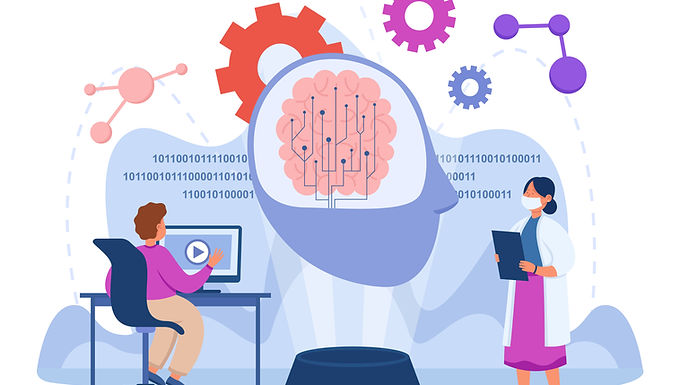
Authors: Jamie Linnea Luckhaus, Therese Scott Duncan, Uppsala University, Sweden
PATH: Participatory eHealth and Health Data Department of Women's and Children's Health Uppsala University
Reviewers:
Stelios Hadjidimitriou, Signal Processing & Biomedical Technology Unit Department of Electrical & Computer Engineering Aristotle University of Thessaloniki, Greece
Kyproula Christodoulou, The Cyprus Institute of Neurology & Genetics, Cyprus
Paraskevi Chairta, The Cyprus Institute of Neurology & Genetics, Cyprus
Björn Falkenburger, TUD Dresden University of Technology, Dresden, Germany
Diagnosing Parkinson's (PD) can be difficult, especially in the early stages. Early symptoms are often mild and can resemble those of other conditions. Because Parkinson's is diagnosed based on clinical signs and symptoms, there is currently no laboratory test that can confirm the condition. As a result, diagnosis is sometimes delayed.
Researchers are exploring whether artificial intelligence (AI) could help identify Parkinson's earlier and support healthcare professionals in making diagnoses. In recent years, AI systems, including machine learning models, have been used to analyse many different types of data, such as information from wearable devices, voice recordings, genetic data, and brain scans. The goal is to identify patterns that may indicate Parkinson's before it becomes obvious in a clinical examination.
How could AI be used to detect Parkinson’s?
Screening in everyday life
Parkinson's can affect movement and sleep long before diagnosis. Subtle changes in walking, daily activity, and sleep patterns may leave detectable signals. Wearable devices such as smartwatches can collect these data continuously during everyday life.
Researchers have shown that AI can identify patterns linked to Parkinson's in wearable sensor data. One landmark study using data from the UK Biobank found that information from a single wrist-worn sensor could identify people in the earliest stages of Parkinson's up to seven years before diagnosis [2].
More recently, AI-PROGNOSIS researchers used sleep, walking, and activity data collected from wrist-worn devices in the Parkinson's Progression Markers Initiative (PPMI) study to train an AI model that could distinguish between people with and without Parkinson's [3]. The model achieved an accuracy of more than 80% and also appeared capable of tracking changes associated with the loss of dopamine-producing brain cells, a key feature of Parkinson's.
Patterns in smartphone use and voice recordings
Smartphones can also provide useful information. Researchers have used data on typing patterns, hand movements, and speech to identify signs of Parkinson's.
For example, changes in touchscreen typing have been linked to reduced fine motor control in people with early Parkinson's [4]. Motion sensors in smartphones have also been used to detect tremor [5].
Because Parkinson's often affects speech, researchers have trained AI systems to analyse subtle changes in voice, including changes in volume, tone, rhythm, and fluency. These analyses have used both everyday speech recordings and recordings of sustained vowel sounds [6,7].
AI-PROGNOSIS researchers are also exploring whether smartphone videos can be used to detect movement, walking, balance, and agility problems using AI-based body-tracking methods [8].
Wearable devices and smartphones offer several advantages: they are relatively inexpensive, easy to use, and can collect information continuously in everyday life. Rather than relying only on a short clinic visit, doctors could potentially use months of objective data analysed by AI to identify patterns consistent with Parkinson's.
Other ways AI may improve Parkinson's diagnosis
Advanced brain scan analysis
AI can identify patterns in brain scans that may be difficult for humans to see. For example, a 2025 study used machine learning to analyse specialised MRI scans and distinguish Parkinson's from two similar neurological conditions: multiple system atrophy and progressive supranuclear palsy. The AI system identified Parkinson's with a sensitivity of about 86% [9].
In the future, doctors may be able to combine brain scans with AI analysis to help distinguish Parkinson's from other conditions earlier. Such tools could be especially valuable in areas where movement-disorder specialists are not readily available.
Medical records and genetic data
AI can also analyse large amounts of health information. One study used machine learning to examine medical records and identify people who later developed Parkinson's. The model correctly identified about 73% of future Parkinson's cases and correctly recognised 83% of people who did not develop the condition [10].
Many of the warning signs identified by the model were already known risk indicators, including tremor, loss of smell, constipation, and certain sleep disorders. Tools like these could help primary care doctors recognise patients who may benefit from referral to a neurologist.
AI is also increasingly being used to analyse genetic data [11]. Researchers are studying genetic factors associated with a higher risk of Parkinson's [12], and machine learning can help identify patterns in genetic information, sometimes combined with age and lifestyle factors. These approaches may eventually help identify people at higher risk and support the recruitment of participants into clinical trials of new treatments [13,14].
Implications and the future of AI in diagnosis
AI has the potential to improve both the speed and accuracy of Parkinson's diagnosis. Earlier diagnosis could allow people to start treatment, exercise programmes, and lifestyle changes sooner. It may also reduce unnecessary tests and treatments for other conditions.
Importantly, AI is expected to support clinicians rather than replace them. An AI tool might highlight unusual activity patterns or provide a second opinion on a brain scan, but healthcare professionals would still make the final diagnosis based on the full clinical picture.
As these tools develop, researchers are working to make AI systems more transparent and easier for clinicians to interpret. Ideally, AI should not only provide a prediction but also explain the factors behind it.
Do people want predictive information?
An important question is whether people actually want to know what AI predicts about their future health.
The answer varies. In one survey of adults without Parkinson's, 79% said they would want to know their risk if predictive information were available [15]. Many wanted this information to help them prepare for the future or take preventive action.
People living with Parkinson's have also expressed interest in personalised information, particularly when it is tailored to their individual situation [16,17]. However, they emphasise the importance of professional guidance and support when receiving such information.
Some people also question the value of very early diagnosis if no preventive treatment exists. A study conducted within the AI-PROGNOSIS project found that people with Parkinson's saw benefits in personalised recommendations and greater understanding of their condition but were also concerned about possible psychological distress if predictions were provided without adequate support [18].
Challenges and considerations
Healthcare systems will need clear guidance on how predictive information should be communicated. Personal preferences, uncertainty, and emotional impact all need to be considered.
Even the most accurate AI systems can make mistakes. A prediction reflects probability, not certainty, and there is still no definitive biomarker that can confirm Parkinson's. For this reason, AI outputs should always be interpreted carefully and within the broader clinical context.
Most AI tools for Parkinson's diagnosis are still in the research stage. Important challenges remain, including ensuring that models are trained on diverse populations, protecting patient privacy, and reducing false positives that could cause unnecessary anxiety.
Nevertheless, the direction is clear: AI has significant potential to strengthen Parkinson's diagnosis. As these technologies continue to develop, the priority must remain supporting informed choice, ensuring accuracy, and keeping the person with Parkinson's at the centre of innovation.
References
[1] Shokrpour, S. et al. Machine learning for Parkinson’s disease: a comprehensive review of datasets, algorithms, and challenges. npj Parkinsons Dis. 11, 187 (2025). https://www.nature.com/articles/s41531-025-01025-9
[2] Schalkamp, A. K., et al. Wearable movement-tracking data identify Parkinson’s disease years before clinical diagnosis. Nature Medicine 29, 2048-2056 (2023). https://doi.org/10.1038/s41591-023-02440-2
[3] Sotirakis, H. et al. D3.2 / First report on predictive modelling for PD. Zenodo (2025). https://doi.org/10.5281/zenodo.15542465
[4] Iakovakis, D., et al. Touchscreen typing-pattern analysis for detecting fine motor skills decline in early-stage Parkinson’s disease. Scientific reports 8, 1-13 (2018). https://doi.org/10.1038/s41598-018-25999-0
[5] Papadopoulos, A., et al. Unobtrusive detection of Parkinson’s disease from multi-modal and in-the-wild sensor data using deep learning techniques. Scientific reports 10, 21370 (2020). https://doi.org/10.1038/s41598-020-78418-8
[6] Laganas, C., et al. Parkinson’s disease detection based on running speech data from phone calls. IEEE Transactions on Biomedical Engineering 69, 1573-1584 (2021). https://doi.org/10.1109/tbme.2021.3116935
[7] Shen, M., Mortezaagha, P. & Rahgozar, A. Explainable artificial intelligence to diagnose early Parkinson’s disease via voice analysis. Sci Rep 15, 11687 (2025). https://www.nature.com/articles/s41598-025-96575-6
[8] Chatzichristos, C., et al. D3.1 / First report on digital biomarkers for PD. Zenodo 2025. https://doi.org/10.5281/zenodo.15542385
[9] Vaillancourt, D. E. et al. Automated Imaging Differentiation for Parkinsonism. JAMA Neurol 82, 495 (2025). https://jamanetwork.com/journals/jamaneurology/fullarticle/2831631
[10] Searles Nielsen, S. et al. A predictive model to identify Parkinson disease from administrative claims data. Neurology 89, 1448–1456 (2017). https://www.neurology.org/doi/10.1212/WNL.0000000000004536
[11] Vilhekar, R. S., & Rawekar, A. (2024). Artificial Intelligence in Genetics. Cureus, 16(1), e52035. https://doi.org/10.7759/cureus.52035
[12] Funayama, M., Nishioka, K., Li, Y., & Hattori, N. (2023). Molecular genetics of Parkinson's disease: Contributions and global trends. Journal of human genetics, 68(3), 125–130. https://doi.org/10.1038/s10038-022-01058-5
[13] Sigala, R. E., Lagou, V., Shmeliov, A., Atito, S., Kouchaki, S., Awais, M., Prokopenko, I., Mahdi, A., & Demirkan, A. (2023). Machine Learning to Advance Human Genome-Wide Association Studies. Genes, 15(1), 34. https://doi.org/10.3390/genes15010034
[14] Pihlstrøm, L., et al. Genetic stratification of age‐dependent parkinson’s disease risk by polygenic hazard score. Movement Disorders, 37(1), 62–69. (2021). https://doi.org/10.1002/mds.28808
[15] Mahlknecht, P. et al. Preferences regarding Disclosure of Risk for Parkinson’s Disease in a Population‐based Study. Movement Disord Clin Pract 12, 203–209 (2025). https://movementdisorders.onlinelibrary.wiley.com/doi/10.1002/mdc3.14264 [16] Van Den Heuvel L, et al. Perspectives of people living with Parkinson’s disease on personalized prediction models. Health Expect. 2022 Aug;25(4):1580–90.
[17] Schaeffer, E. et al. Patients’ views on the ethical challenges of early Parkinson disease detection. Neurology 94, e2037–e2044 (2020).
[18] Luckhaus, J. L., et al. A qualitative exploration of ethical aspects of using AI in Parkinson disease: Patient panel study. JMIR AI 2026;5:e74144. (2026). doi: 10.2196/74144